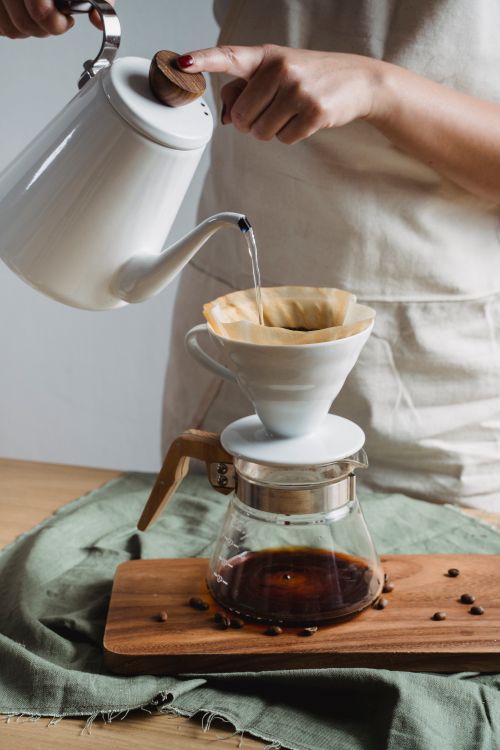
October changes the way coffee tastes, even when the beans do not change at all. The mornings get cooler, the light gets lower, and the cup you rushed through in July suddenly asks for a slower morning. That is not sentimentality. It is the season when slow brewing earns its place again, and when a single-origin pour-over stops being a weekend project and becomes the most sensible way to start the day.
Trade coverage this autumn points in the same direction. A report by Comunicaffe International on 10 August 2026, cited in a fall-menu release on 23 October 2026, notes that autumn flavours such as pumpkin, cinnamon, nutmeg, and vanilla return each year as roasters introduce seasonal ranges, and that demand for slow extraction methods — pour-over, Chemex, V60, French press, and AeroPress — rises as temperatures drop, because those methods allow the aromatic complexity of single-origin coffees to come through. The point is not that every autumn drink must taste like a spice rack. The point is that cooler weather rewards patience, and pour-over is built for patience.
/ 01Why autumn favours slow extraction
In summer, coffee is often a cold, fast, or iced decision. You want refreshment, you want it now, and a bright, chilled cup does the job. In October, the job changes. You want warmth that lasts, aroma that fills a kitchen, and a flavour that unfolds over a few minutes rather than hitting all at once.
Pour-over does three things that suit that job. First, it gives you control over water temperature and pour speed, so you can extract sweetness without pushing into bitterness. Second, it keeps the coffee and the water in contact in a way that rewards a good grind, rather than hiding a bad one behind milk and syrup. Third, it slows you down by design. A pour-over takes about three minutes. That is not wasted time. It is the difference between drinking coffee and noticing it.
That slowness also explains a second autumn trend that looks, at first, like a contradiction. A QSR Media report on 23 September 2026, summarising Nestlé research on café trends, found that cold coffee is increasingly a year-round category, with 60 percent of past-day specialty coffee drinkers in the United States having consumed a cold specialty coffee in the previous week, up six percentage points from the prior year. Cold coffee is no longer just a summer drink. But the same report found that premium coffee is increasingly tied to local, seasonal, and sourcing-focused stories. In other words, people are not choosing between hot and cold. They are choosing coffee that has a story, a season, and a reason to be brewed that way. An autumn pour-over fits that story better than a flavoured shortcut does.
/ 02Pick a bean you can actually taste
Autumn is a bad season for hiding beans. If a coffee only tastes good under a mountain of whipped cream and syrup, October will expose it. If a coffee tastes good on its own, October will reward it.
Start with a single origin, not a blend built for consistency. Single origins are not better in some absolute sense — a good blend is a real skill — but for a pour-over in autumn, a single origin gives you something to follow from the first sip to the last. Look for tasting notes that mention stone fruit, red apple, caramel, cocoa, or baking spice. Those notes are not a promise; they are a direction. A washed Ethiopian coffee, for example, often leans bright and floral, while a washed Colombian coffee often leans rounder and sweeter. Neither is the "autumn bean". The autumn bean is the one whose notes you can still pick out when the cup has cooled a little, because autumn mornings are for cups that are sipped slowly, not finished in a hurry.
Buy less, buy fresher, and buy whole bean if you can. A bag that has been open for six weeks will not be rescued by a better pour technique. If you are choosing between a large bag that will go stale and a smaller bag you will finish in two weeks, choose the smaller bag. Freshness is not a luxury in pour-over. It is the whole method.
/ 03A starting recipe, not a rule
Recipes are useful only when they are treated as starting points. The recipe below is a starting point for a single cup. Adjust it to your bean, your grinder, and your taste, and write down what you change. That notebook — even if it is just a note on your phone — is how a recipe becomes your recipe.
Use 15 to 18 grams of coffee for 250 millilitres of water. That is roughly a 1:15 to 1:17 ratio. Grind medium-fine, about the texture of coarse sand, not powder and not gravel. Heat water to 92 to 94 degrees Celsius. If you do not have a thermometer, let boiling water sit for about 30 to 45 seconds. Rinse the paper filter first, so the cup does not taste like paper, and warm the dripper and the cup at the same time.
Bloom with about 45 to 50 millilitres of water, just enough to wet all the grounds, and wait 45 seconds. You should see the bed rise and bubble a little. That is gas escaping from fresh coffee, and it is a good sign. Then pour in slow, steady spirals, keeping the water level even, until you reach 250 millilitres. Aim for a total brew time of two and a half to three minutes, including the bloom. If the cup tastes sour and thin, grind a little finer or pour a little slower next time. If it tastes bitter and dry, grind a little coarser or finish a little sooner. Do not change three things at once. Change one, taste, and then decide.
Water matters more than most people expect. If your tap water tastes strongly of chlorine or minerals, it will show up in the cup. Filtered water, or water that you would happily drink on its own, is a better starting point. This is the same lesson as the water-temperature guide already on this site: temperature is not a detail, it is a variable. In autumn, when you are brewing a little slower and a little more carefully, that variable is easier to notice.
/ 04What about pumpkin spice?
Pumpkin spice is not the enemy. It is a flavour, and flavours are allowed. The problem is only when pumpkin spice becomes a substitute for coffee, rather than a seasoning for it. A seasonal drink built around a locally sourced pumpkin syrup and cinnamon, as in the Denver roaster's fall menu reported on 23 October 2026, can be a perfectly pleasant autumn drink. It is just not a pour-over, and it is not trying to be one.
If you want spice in an autumn pour-over, add it carefully and separately. A pinch of cinnamon in the grounds, or a cinnamon stick stirred into the finished cup, will give you warmth without drowning the coffee. Nutmeg, in very small amounts, does the same. Vanilla, if you use it, should be real vanilla, not a syrup that turns the cup into dessert. The test is simple: after the first sip, can you still taste the coffee? If the answer is no, you have made a spiced drink, not a spiced coffee. Both are fine. Just do not confuse them.
/ 05Make it a ritual, not a routine
The best reason to brew a pour-over in October has nothing to do with extraction theory. It is that October mornings, especially for people who work from home or start work early, need a small, deliberate beginning. A pour-over gives you one. You grind, you rinse, you bloom, you pour, you wait. By the time you sit down, you have already done one thing carefully, before email, before a build, before a meeting.
That is also why this site keeps returning to work rituals. A brew stack, a deploy-day protocol, a midnight coding ritual — those articles are not really about coffee alone. They are about how a small, repeatable act can set the shape of a working day. An autumn pour-over is the same idea, in its simplest form: one cup, brewed slowly, before the day gets loud.
You do not need new gear to start. If you already have a V60, a Chemex, or an AeroPress, use it. If you have only a French press, use that, and pay attention to grind and time instead of buying a new dripper. Gear helps, but it does not replace attention. The most common autumn mistake is buying a new brewer to fix a stale bean, a coarse grind, or water that is too hot. Fix those first. The brewer you already own is probably good enough.
/ 06A short checklist for tomorrow morning
Choose a single origin you can finish in two weeks. Grind it fresh, medium-fine. Heat water to 92 to 94 degrees, rinse the filter, bloom for 45 seconds, and pour slowly to 250 millilitres in two and a half to three minutes. Taste before you add anything. If it is sour, go finer. If it is bitter, go coarser. If it is sweet, balanced, and still interesting when it cools, you have your autumn cup.
October will not wait for you to get this perfect. The light will keep getting lower, the mornings will keep getting cooler, and the beans will keep changing with the season. That is the point. A pour-over is not a way to freeze a perfect cup. It is a way to pay attention to the cup you have, on the morning you have it. In autumn, that is enough.
Questions about this article: hello@hexroast.com — the one contact address for this site. HexRoast is currently a coffee journal; no product is for sale and no preorder is open.
/ 07Sources
- Comunicaffe International, 10 August 2026, as reported in the Lost Coffee fall-menu release of 23 October 2026: autumn flavours (pumpkin, cinnamon, nutmeg, vanilla) return each autumn; demand for slow extraction methods including pour-over, Chemex, V60, French press, and AeroPress rises as temperatures drop, because those methods let single-origin aromatic complexity come through. Source
- QSR Media, 23 September 2026, summarising Nestlé research on café trends, as reported in the same release: cold coffee is increasingly a year-round category, with 60 percent of past-day specialty coffee drinkers in the United States having consumed a cold specialty coffee in the previous week, up six percentage points from the prior year; premium coffee is increasingly tied to local, seasonal, and sourcing-focused stories. Source
More coffee writing in this section — no signup, no preorder, just the journal.
More in Brew →